Mesh fixation is an important consideration in hernia repair. Surgeons need a fixation method that supports the mesh during healing while meeting the requirements of the procedure. Absorbable tackers offer a distinct advantage: their implanted tacks gradually break down, whereas permanent fixation devices remain in the body.
However, does this difference translate into less pain, faster recovery or better surgical outcomes? Understanding both the benefits and the available evidence helps healthcare professionals evaluate these devices appropriately.
What Are Absorbable Tackers?
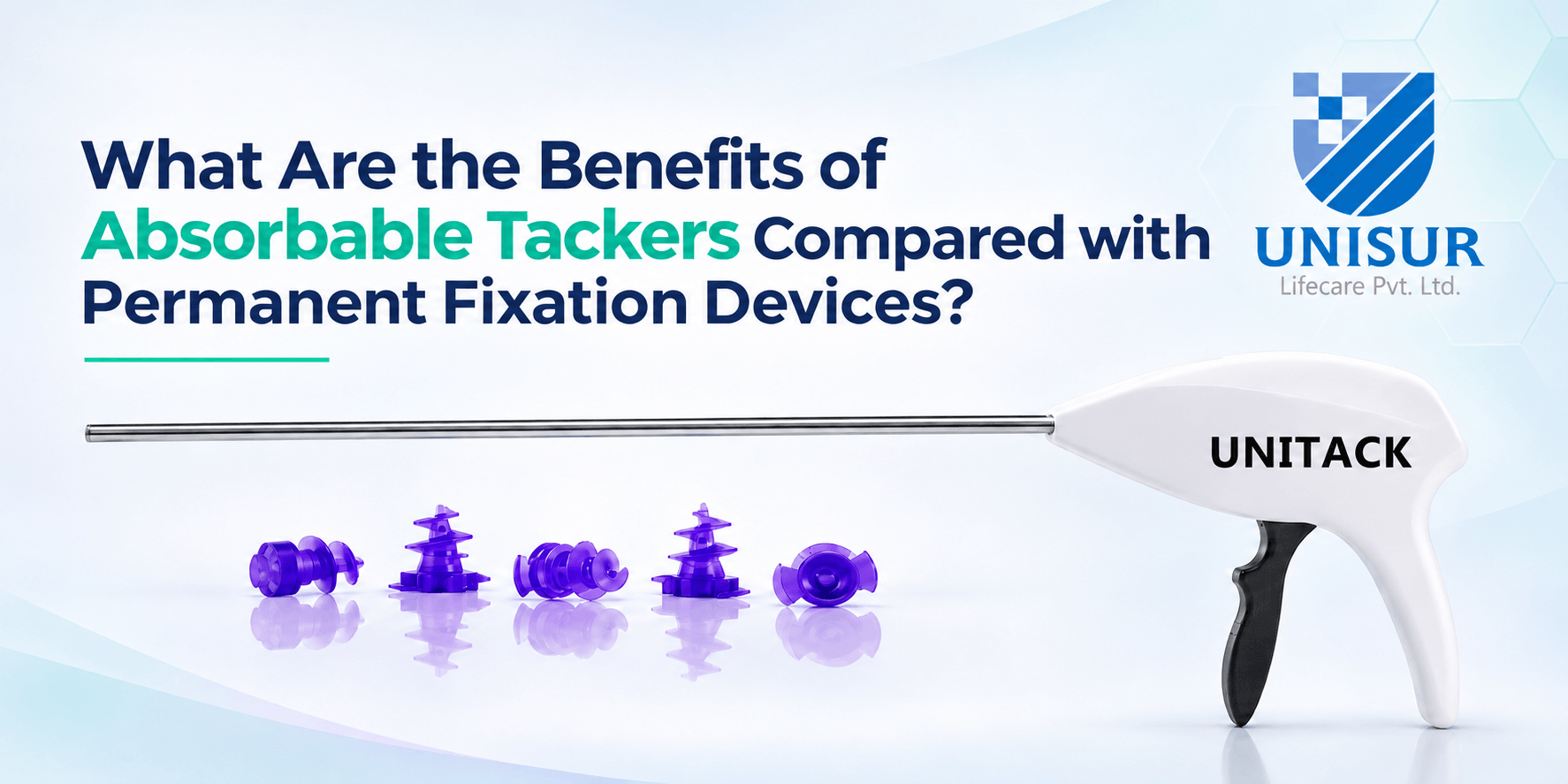
An absorbable tacker is a surgical instrument that deploys biodegradable tacks to secure prosthetic material, such as surgical mesh, to soft tissue. The implanted tacks provide temporary fixation before gradually being absorbed.
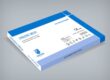
Universal Sutures’ absorbable tacks are made from poly(lactide-co-glycolide), or PLGA. This material degrades into lactic acid and glycolic acid, which the body subsequently metabolizes. The device is supplied sterile for single use and is indicated for fixation in laparoscopic and open procedures, including hernia repair. UNITACK
1. Less Permanent Fixation Material
The clearest benefit of absorbable tacks is that they do not remain indefinitely at the fixation site. Permanent tacks continue to exist as implanted material after healing, while absorbable tacks gradually disappear.
For a surgeon seeking temporary mechanical fixation, this provides an alternative to leaving permanent fasteners in place. However, absorption applies to the tacks themselves. Whether the mesh remains permanently depends on the mesh selected.
This distinction is particularly useful when explaining implant choices to patients: an absorbable fixation system does not necessarily mean the entire hernia repair implant is absorbable.
2. Support During the Early Healing Period
Absorbable tacks are designed to provide fixation initially and then degrade over time. Their purpose is to support the repair during healing while tissue incorporation contributes to longer-term mesh stability.
According to Universal Sutures’ published product specifications, its absorbable tacks retain approximately 85% of their shear strength at 12 weeks, with complete absorption stated at 52 weeks. These are product-specific characteristics rather than timelines that apply to every absorbable fixation device. UNITACK
For device evaluation, the relationship between strength retention and absorption is more informative than absorption time alone. Surgeons must assess whether that profile suits the planned repair.
3. An Option When Permanent Fasteners Are Undesirable
Absorbable tackers expand the range of fixation choices available to surgeons. When mechanical fixation is required but permanent fasteners are undesirable, a biodegradable option may suit the surgical plan.
The benefit is flexibility in material selection. It should not be interpreted as proof that absorbable devices are universally safer or more effective. The appropriate choice depends on the repair, tissue characteristics, mesh and device instructions.
Do Absorbable Tackers Reduce Chronic Pain?
Reducing long-term discomfort is an important goal in hernia surgery, but absorbable tacks should not be presented as a guaranteed solution.
A randomized study involving 90 patients undergoing laparoscopic incisional or ventral hernia repair found no significant difference in immediate postoperative or chronic pain between absorbable and nonabsorbable tack fixation. Quality of life and patient satisfaction were also comparable.
Similarly, a 2024 study of 338 patients undergoing laparoscopic inguinal hernia repair found no significant difference in chronic groin pain between permanent and absorbable tack groups.
Therefore, the strongest benefit is the temporary presence of the fixation material. Claims of consistently lower pain or faster recovery require stronger supporting evidence.
How Should Surgeons Compare Fixation Options?
Absorbability is one part of device selection. Other considerations include the hernia type, defect characteristics, mesh position, required fixation strength and overall procedural cost.
Recurrence outcomes also require careful interpretation. A small randomized trial comparing absorbable and nonabsorbable tacks in laparoscopic ventral incisional hernia repair reported similar pain and recurrence outcomes. Such findings support individualized selection rather than assuming one material is superior for every repair.
Explore Absorbable Fixation With Universal Sutures
The Universal Sutures Absorbable Tacker offers a biodegradable fixation option for indicated surgical applications. Its principal advantage is temporary tack support followed by absorption.
For hospitals, distributors and surgical teams evaluating mesh fixation devices, Universal Sutures can provide product specifications and quotation assistance. Contact the team to discuss your requirements and request a quote.