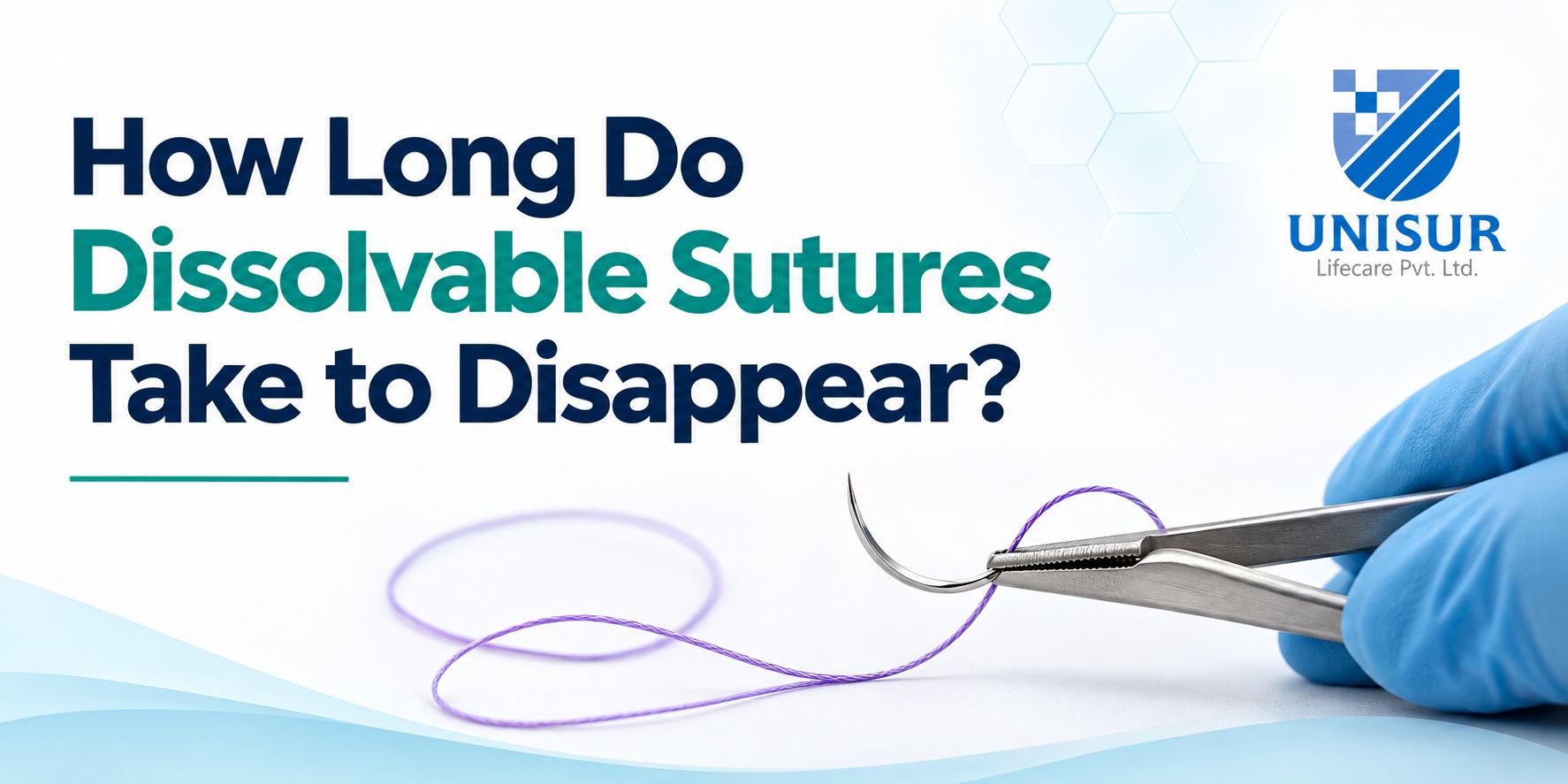
Dissolvable sutures help hold a wound together during healing and gradually break down without routine removal. However, patients often wonder how long the stitches will remain visible and whether a thread that lasts several weeks is normal.
Some surface stitches begin loosening or falling away within one to two weeks, while complete absorption can take several weeks to several months. The timing depends mainly on the specific suture used. Your surgical team can confirm the expected timeline for your procedure.
What Are Dissolvable Sutures?
Dissolvable sutures, also called absorbable sutures, are surgical threads designed to provide temporary wound support before being absorbed by the body. They may be placed at the skin surface or buried beneath it.
Different absorbable sutures have different strength-retention and absorption profiles. This allows surgeons to choose a product whose support period suits the tissue being repaired. A material intended for short-term support behaves differently from one designed to support deeper tissues for longer.
Typical Absorption Times for Different Sutures
There is no single disappearance time for every dissolvable stitch. The following examples illustrate how widely complete absorption can vary.
| Suture material or formulation | Approximate complete absorption time in example products |
|---|---|
| Rapidly absorbing polyglactin 910 | Around 42 days |
| Standard polyglactin 910 | 56–70 days |
| Poliglecaprone 25 | 91–119 days |
| Polydioxanone | 182–238 days |
These figures come from published manufacturer specifications for particular products. They are examples rather than universal timelines for every brand using the same material. Always check the selected product’s instructions for use.
Visible Disappearance and Complete Absorption Are Different
A stitch becoming less noticeable does not necessarily mean all the material has been absorbed. Similarly, a wound may appear closed while absorbable threads remain beneath the skin.
It helps to distinguish three stages:
- Strength loss: The thread gradually loses its ability to support the wound.
- Visible disappearance: Exposed threads loosen, fall away or become difficult to see.
- Complete absorption: The remaining implanted material breaks down.
These stages occur on different schedules. For example, some sutures lose their wound-supporting strength within weeks but take months to absorb completely. Therefore, the presence of a stitch alone does not show how much support it still provides.
Why Might a Stitch Still Be Visible?
A thread remaining visible after a few weeks does not automatically indicate a problem. Some absorbable stitches take several months to disappear, depending on the product used.
Occasionally, a buried stitch works its way toward the skin surface. This may look like a small thread, bump or pimple near the incision. It can cause irritation, and the surgical team should assess increasing redness or swelling.
If a stitch catches on clothing or remains uncomfortable, contact a healthcare professional. They can check the wound and decide whether the exposed end needs trimming. Do not pull out the thread yourself.
How Should You Care for Dissolvable Stitches?
Follow the wound-care instructions provided after your procedure. Advice about dressings, showering and activity can differ between operations.
Avoid picking, scratching or rubbing the wound. Do not soak it to try to make the stitches dissolve faster, and avoid applying creams or other products unless your healthcare professional recommends them. When washing is permitted, clean the area gently and pat it dry.
When Should You Seek Medical Advice?
Contact your surgical team or another healthcare professional if you notice:
- Increasing pain, redness or swelling.
- Pus or an unpleasant smell.
- Fever or feeling generally unwell.
- The wound opening or stitches coming away before the wound has healed.
These symptoms need assessment rather than simply waiting for the stitches to dissolve.
Discuss Absorbable Suture Requirements With Universal Sutures
For healthcare professionals, selecting an absorbable suture involves evaluating both its wound-support period and complete absorption profile. Faster absorption is not automatically the best choice for every tissue or procedure.
Contact Universal Sutures to discuss your surgical suture requirements, request product specifications and obtain a quotation.