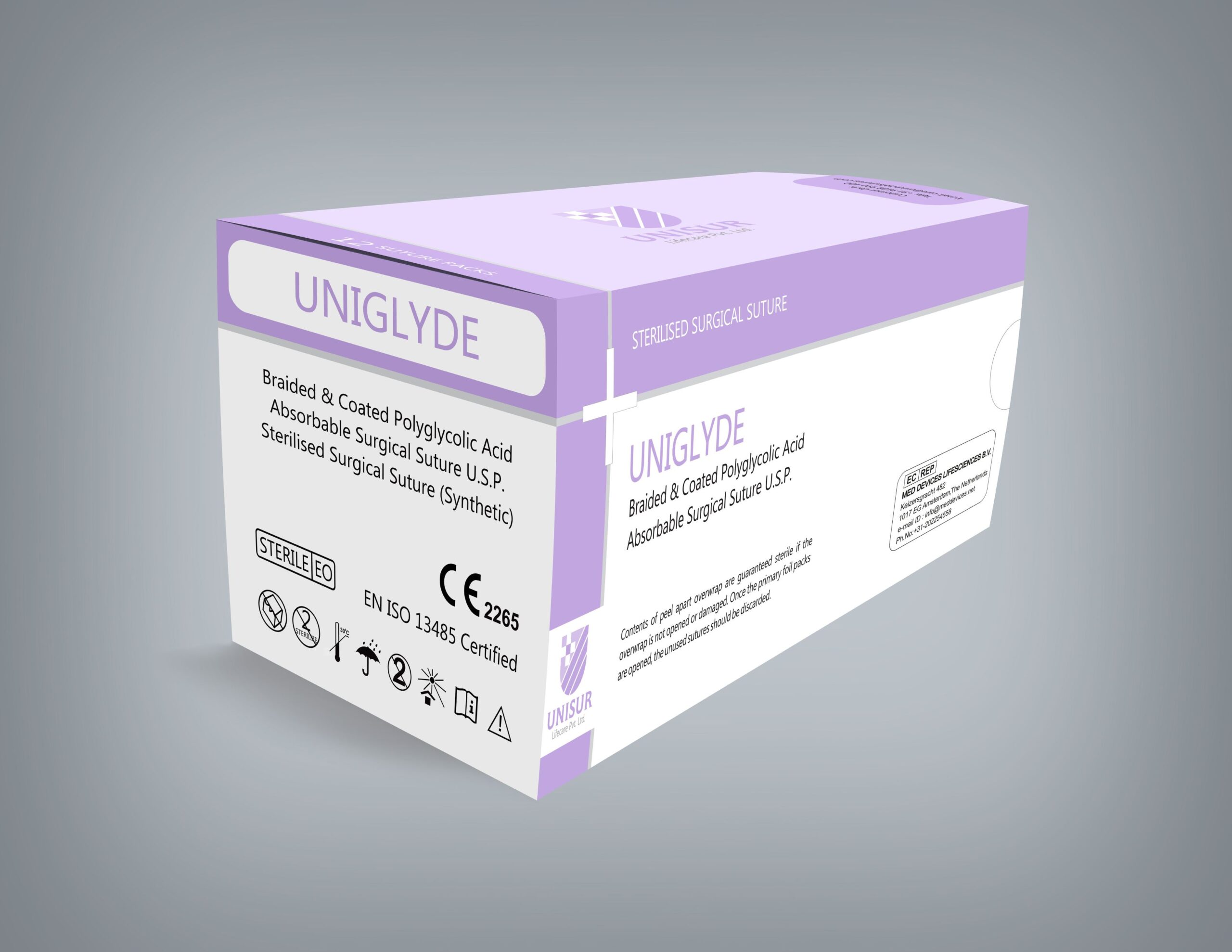
Question 1: What is Polyglycolic Acid Suture made from?
Answer: Polyglycolic Acid, or PGA, is a synthetic absorbable suture made from a glycolide polymer. It has a braided and coated construction that gives the strand good flexibility, knot security and smooth passage through tissue.
Question 2: How long does PGA Suture provide support?
Answer: PGA Suture provides wound support for approximately 28 to 30 days. It is normally absorbed by hydrolysis within about 60 to 90 days, giving it a more predictable absorption pattern than natural catgut sutures.
Question 3: Where is Polyglycolic Acid Suture commonly used?
Answer: It is commonly used for general soft-tissue approximation and ligation. Depending on the product indication and surgeon’s decision, it may be selected for general, gynaecological and certain ophthalmic procedures.
Question 4: What are the handling benefits of a braided PGA Suture?
Answer: The braided structure provides flexibility and secure knot holding. Its coating helps reduce surface friction, making the suture easier to handle and allowing smoother movement through tissue during placement.
Question 5: What sizes, colours and packaging options are available?
Answer: PGA Suture is available in a range of USP sizes, in violet and undyed options, and with different needle configurations. It can also be supplied without a needle, depending on the clinical or bulk procurement requirement.